
Sustainability
Less idling. Clearer air.
Sustainability is not a side project for us. Traffic that flows instead of idling is the work itself, and we hold our own operations to the same standard.
Our vision
Every minute a vehicle waits at a signal that did not need to be red is fuel burnt for nothing. We build the systems that give that time back to the city, and to the air above it.
Planet. People. Purpose.
Three commitments that shape what we build and how we build it.
- Planet
Cleaner flow
Vehicles burn fuel and emit most per kilometre when they stop, idle and start again. Signals that respond to real demand cut avoidable stops; coordinated corridors keep traffic moving at steady speeds.
- Fewer unnecessary stops and shorter queues
- Priority that keeps buses and emergency vehicles moving
- Live information that spreads traffic across the network
- People
Safer, fairer streets
A street works for everyone on it: pedestrians, cyclists, two-wheelers, autos, buses and cars. We design for mixed Indian traffic as it is, not as a model of it.
- Pedestrian and vulnerable-road-user safety in every signal plan
- Privacy by design: collect what the purpose needs, no more
- Enforcement decisions stay with authorised officers
- Purpose
Responsible technology
Infrastructure lasts for decades, so what we install should too. We build for long service lives, open standards and repair, and we report what we measure honestly.
- Open standards, so cities are never locked in
- Hardware built to be maintained, upgraded and recycled
- Results published only when they are measured
Where the savings come from
Fixed timers stop traffic whether or not anyone is crossing. Adaptive control reads the junction and coordinates its neighbours, so a corridor runs as one green wave.
We will publish measured results from our pilot corridors: stops, delay, queue length and the fuel and emissions they imply, against how the same roads performed before. Until then, we make no numerical claims.
What changes with adaptive controlOur own footprint
We are an early-stage company, so most of our footprint is still ahead of us. That is the best time to design it down. Each line below says plainly whether it is in our design, a commitment or a plan.
Compute at the edge
In our designVideo is analysed at the roadside and only events and counts travel over the network, rather than continuous footage. Less data moved and stored means less energy spent on it.
Long-life, repairable hardware
In our designControllers and sensors are specified for heat, dust and monsoon conditions, with modular parts so a failure means a replacement module, not a replacement cabinet.
Low-power and solar-ready field units
PlannedRoadside equipment that draws little power and can run from solar with battery backup where the grid is unreliable.
Cleaner hosting
CommitmentWe will prefer data-centre and cloud regions with credible renewable-energy sourcing, and size computing to what the work needs.
End-of-life and e-waste
CommitmentRetired electronics go to authorised e-waste recyclers, in line with India's E-Waste (Management) Rules, and never to landfill.
Measuring our footprint
PlannedAs we grow we will measure our operational emissions, set a baseline and publish it here, with targets set against that baseline rather than before it.
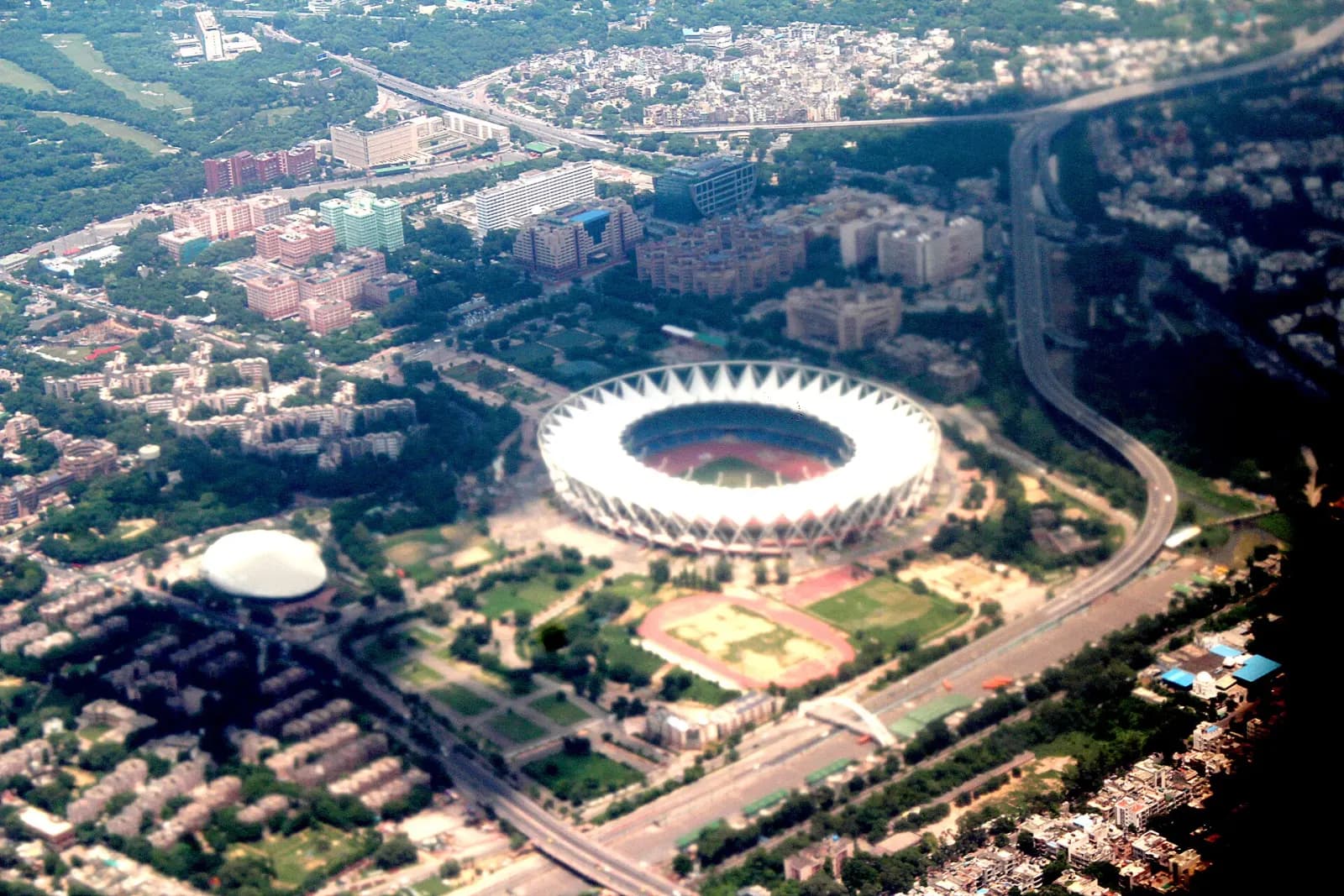
A city's air is shared by everyone who breathes it. So is every junction that feeds it.
Delhi from the air. Photo: Sumita Roy Dutta, CC BY-SA 4.0, via Wikimedia CommonsThe global goals our work serves
Our work speaks most directly to three of the United Nations Sustainable Development Goals.
- Goal 9
Industry, innovation and infrastructure
Resilient infrastructure built with local engineering.
- Goal 11
Sustainable cities and communities
Safer, more accessible transport for everyone on the road.
- Goal 13
Climate action
Less time idling, less fuel burnt for nothing.
Policies and codes of conduct
The policies that will govern this work are being written alongside our first deployments. Each will be published here; until then, ask us and we will share the current draft.
- In preparation
Environmental policy
How we limit the impact of our products and operations.
- Read the policy
Responsible AI and privacy
How our systems handle video, data and automated decisions.
- In preparation
Product stewardship and e-waste
Design for repair, take-back and authorised recycling.
- In preparation
Supplier code of conduct
What we ask of the companies that build with us.
- In preparation
Health and safety in the field
Keeping installation and maintenance crews safe at live junctions.
Build a cleaner corridor with us.
City agencies, transport operators and researchers: if you want to measure what smarter signals do for your air and your commuters, let's start with one corridor.